Two articles landed in my queue the same week: Microsoft's New Agentic Software Delivery Primitives and Anthropic's Solving Code Review at Anthropic . Different companies, different scale, same underlying claim: the software delivery lifecycle hasn't changed shape, but where a human's attention goes inside it has moved almost entirely. I read both back to back and realized I wasn't reading about the future. I was reading a description of my Tuesday night. I run a home lab on Paperclip , tl;dr: its an agent farm with project management built in, and it's completely open source. I'm the human in the loop, and I have no other humans on staff (the kids do share ideas tho), then it's just a roster of agents (with different skills and harnesses) that pick up issues, check them out, break down big tasks, write code, open PRs, and escalate when they're stuck. My actual role in this most evenings is not writing code. It's being the one human in the loop ...
Get link
Facebook
X
Pinterest
Email
Other Apps
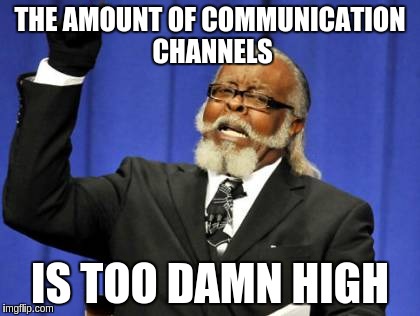
The amount of communication channels is too damn high
Get link
Facebook
X
Pinterest
Email
Other Apps
-
At work we are blessed with the freedom to work with a wide selection of technologies. This is a wonderful thing that lets the mind be free from restriction. Where this becomes an issue is when teams try to work together. There is a history issue at work to work in silos. Teams work independently on the idea with little input from outside contributors until the product is done. This is getting better though brown bags and user groups but still needs some work. One area that needs help is chat clients.
I found people love using there own chat client for their given team. We have a campus wide XMPP service which works fine. Its just chat after all. If that was it, there would be no point to this blog post. There is also Skype for Business that DoIT started implementing. Honestly XMPP is much better for chat, but some people deem that they will only use Skype and nothing else. Then we have teams using Slack. Slack has a lot of great features, but one disadvantage is you have to sign up for every team. Cross team collaboration doesn't work unless you are part of both teams. This leads to teams working in silos again, with no input from others. Next up, Mattermost. A Slack clone but the advantage of running locally. Another advantage is you can private chat anyone in Mattermost, regardless of team. This can be a big advantage. We also have Google Hangouts for work, but it is rarely used outside of doing Hangout video chatting.
That is just for work! I am also part of some open source orgs that have IRC. I also have Google Hangouts, SnapChat, Twitter, Instagram, and Facebook messenger for friends and family.
The problem that I'm alluding to above is, I have 4 chat clients for work, and more for personal. I'm reminded of that moment in Office Space when Peter describes having 8 bosses to the consultants Bob and Bob.
I know I'm complaining, but it's too much. Think of how many man hours was put into each one of these services, and think of what else we could have accomplished in the world. I'm attempting to embrace it, but sometimes it's just too much. Its hard to remember what form of communication each person prefers. So I challenge the world, please choose one.
At first
After a while...
So what do we do? I'm not 100% sure. For work I think we could just get away with using what we currently have or all decide to move to a Slack/Mattermost type client. For personal I hope one form of chat clients just takes over and all the others wither away.
It happened again. I missed something critical on Slack—a message buried beneath the flood of notifications that should have been front and center. This was the wake-up call I needed. Despite all the efforts to stay organized, Slack’s constant stream of notifications, unread messages, and channels I don’t even remember joining were drowning out the important stuff. Sound familiar? That’s when I turned to an old, yet effective, decision-making tool: Eisenhower’s Matrix . You may know it as the framework that helps prioritize tasks based on urgency and importance, separating what's truly critical from what can wait—or what shouldn’t even be on your plate at all. But how does this tool apply to Slack? Let me explain. Understanding Eisenhower’s Matrix If you’re not familiar, the Eisenhower Matrix categorizes tasks into four quadrants: Urgent and Important : Do it now. Important but Not Urgent : Schedule it for later. Urgent but Not Important : Delegate it. Neither Urgent nor Important ...
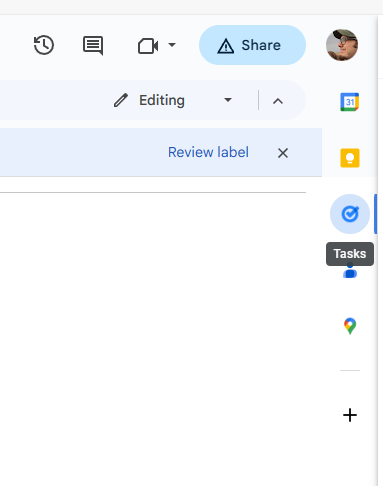
I love a good todo list, and I’ve tried a lot of apps, and none of them stuck, until I found Google Tasks. I think it stuck, unlike the others, because Grafana uses Google Business Suite. Google Tasks is an application that is fully embedded with all other Google work suite products (docs, gmail, sheets, slides, etc…) and it’s very powerful! I wanted to write a small post about it to share what I’ve found useful. Tasks is available in the right sidebar of most Google Applications: When you click that icon then a new sidebar appears, you can quickly add tasks manually, like every other todo list. The little arrow circle is a way you can set tasks as recurring. Need a way to remember to fill out your TPS report every Friday, here ya go. You can also make multiple lists, if you want to do that. I’ve found it’s useful to just have 1 for work and 1 for personal stuff but everyone is different here. Google Docs Integration In google docs, Tasks is also embedded. By clicking that ...
When you approach a bridge that overlooks a river do you tend to look upriver at the past, or downriver to see the future? I am naturally drawn to looking downriver because I like to plan for the future. For the role of manager, you have three major areas of responsibility, the people, the projects, and gluing those together. That last part is where the magic happens. If you get great alignment with your people and what they work on, that is where you have the best outcomes. People Helping people thrive is the cornerstone of any people manager. How we align people and set them up so that they can be at their best self is critical to our success, and the success of the company. It's a win-win-win situation. It all starts with hiring and onboarding. For me, there are three critical areas that I focus on during the interview process. Do they have a growth mindset, do they include others during their decision-making process, and overall is the candidate a kind human being? Beyond the ...



Comments
Post a Comment